
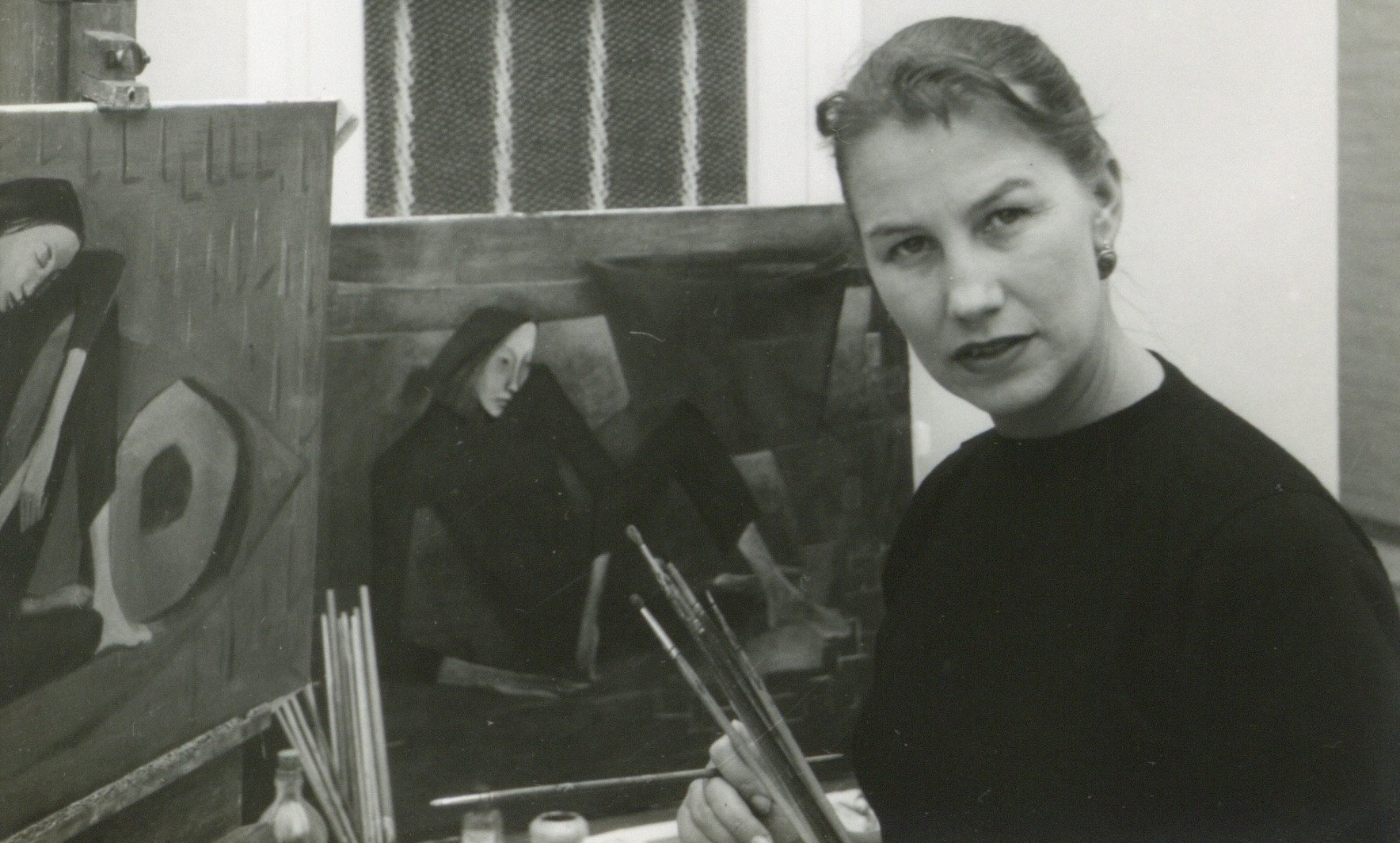
JULIA MORLEY
London, 2 September 1917 – Ludlow, 16 May 2008
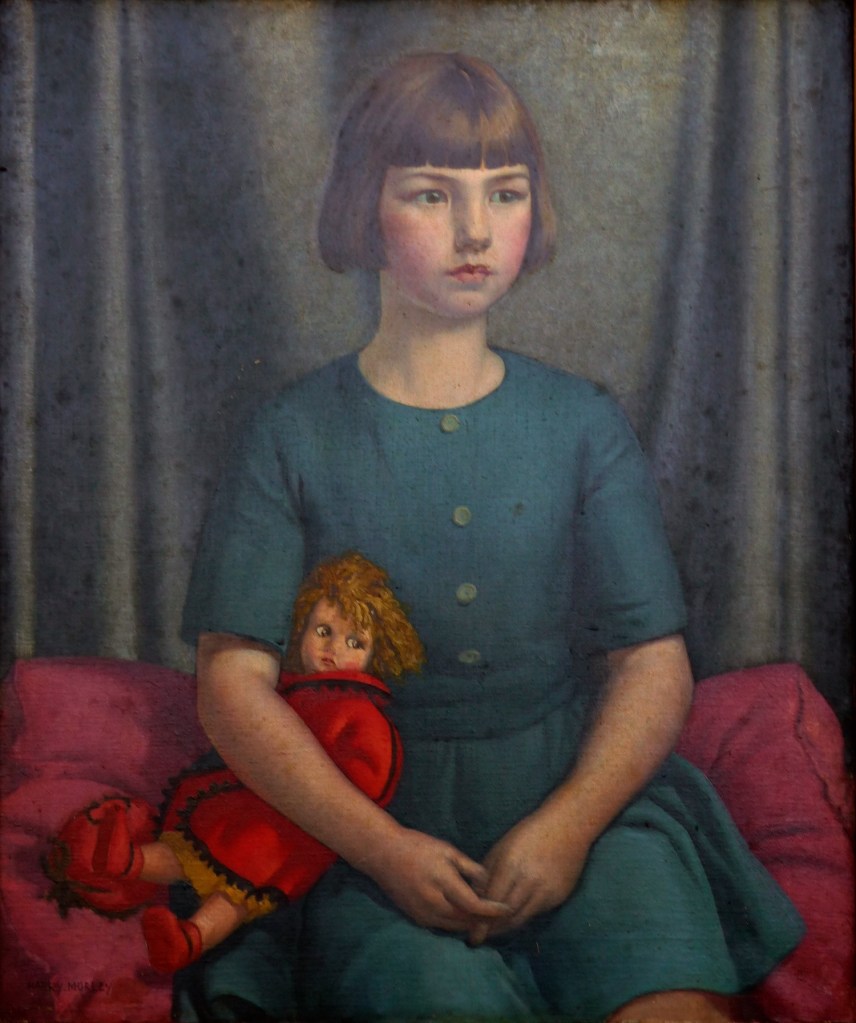
Painting was a profession for which Julia Morley had long prepared herself. Yet in January 1948, aged 30, she compromised a promising artistic career in order to support her new husband, colonial administrator David Whinfield Barclay Baron.
Julia grew up in a lively creative and intellectual environment. The second daughter of painter-etcher-engraver Harry Morley ARA RS RE and designer-calligrapher-embroiderer Lilias Helen Morley (neé Swain), Julia studied at Byam Shaw School of Art, the Royal Academy Schools 1934-39 (where she was awarded an Edwin Austin Abbey Scholarship for Mural Decoration), and the Slade School of Art during its war-time relocation to Oxford. After four years advising on and designing camouflage schemes for the Air Ministry, she resumed her training at the Slade in London. With Europe at peace and her studies completed, Julia was, as her daughter points out, ‘full of confidence and hope for the future’ that lay ahead for her as a painter.
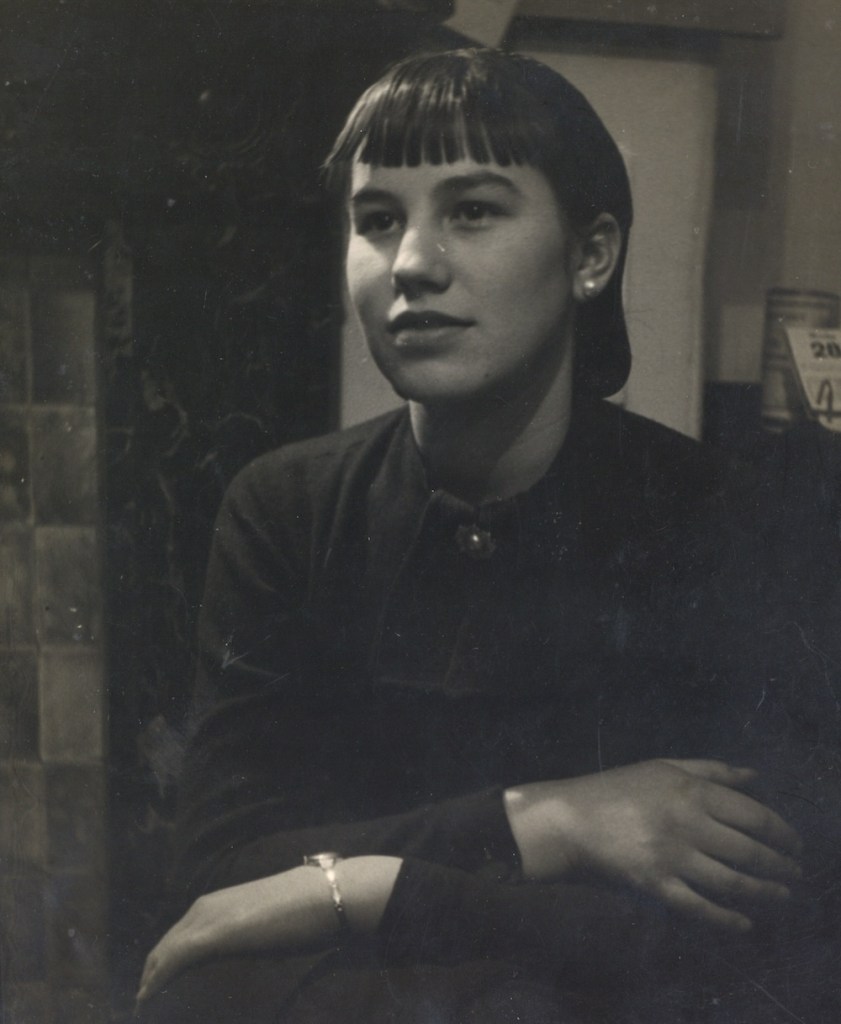
However, the life of a colonial wife, for three years in Nairobi and fifteen years in Hong Kong, was to deprive Julia of the opportunity to network and participate in the London art scene. A modern and independent thinker, ‘elegant and sparkling with a bohemian chic and an interesting view on life,’ she missed the stimulation of the Western art world and found it increasingly difficult to work in isolation. Frustrations and tensions notwithstanding, she navigated the expectations that fell upon her as a colonial wife, home-maker and mother, to ensure time for her art practice.
In Hong Kong, Julia supported her husband – accompanying him to official engagements, cocktail parties and hosting dinner guests. Between times, she painted, exhibited and undertook several important mural commissions. It was, Julia reflected, her most productive period. Painting and drawing street vendors or harbour-side fisherfolk, or indulging her passion for Chinese porcelain at Cat Street market, brought her into closer contact with Hong Kongers than would most wives of senior government officials. She found the Chinese culture absorbing and fascinating and took a special interest in the Chinese way of life. Yet the paintings she made in Hong Kong of amah, coolies, market traders, boatmen and fisherfolk – signed “JM” yet exhibited under the name of Julia Baron – are to this day unknown here in the UK.
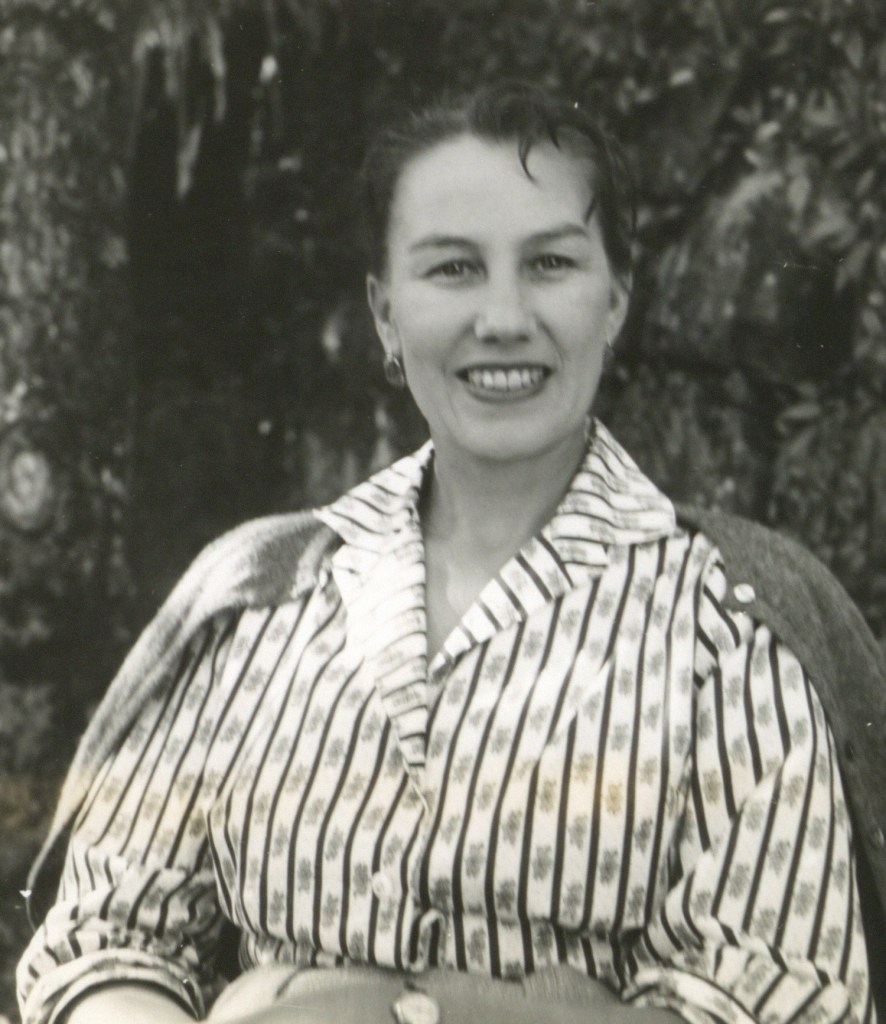
Stifled by the oppressive summer heat, traffic and bustling crowds of Hong Kong, Julia often yearned for England, remembering ‘lying on a rug in a country garden watching the shadows and listening to bird song.’ Reading Dorothy Wordsworth’s journals in June 1955 gave her a ‘wonderful idea of the countryside’ surrounding Grasmere and made her ‘envious’ of the life Wordsworth had led. ‘It is immensely soothing to read about the soft misty atmosphere of the Lakes,’ Julia noted in her journal, ‘Hong Kong is so hard, so definite, so unsubtle by comparison.’
Julia and David Baron returned to England in 1966, living at first in London with Lilias Morley in Earl’s Court and then Hadstock near Cambridge. Though she drew and painted wherever she lived, Julia resumed painting in a sustained way upon their move to Ashford Charbonel in rural south Shropshire in 1974. There she recalled Samuel Palmer landscapes and the lyrical, mystical paintings of William Blake that had first impressed her in 1942 when, ‘lying in the orchard, nibbling apples’ reading ‘the most wonderful book on Blake,’ she ‘became a disciple of Blake on the spot.’ She explained to her parents: ‘I’ve never appreciated him before perhaps because, before I always wanted to paint what I saw and now circumstances have forced me to paint from my imagination or not at all, and so he becomes intensely interesting.’
Stimulated by the gentle, mellow Shropshire countryside, and by myth and by music, Julia painted highly imaginative and poetic ‘dreamscapes.’ These are small, intimate, twilight paintings in which shepherds tend their flock at dawn or dusk or by moonlight. The countryside is selected, edited and stripped of detail in her endeavour to convey an Arcadian ideal. She also alludes to Italian Quattrocento landscapes. ‘Being my father’s daughter,’ she wrote in the 1990s, ‘I was brought up on the early Italian Renaissance painters (for him that is where art stopped short!).’
The artist’s contentment is palpable. Hers was a world away from the congestion, hubbub and pressures of city life in Hong Kong. Living now among the ‘blue remembered hills’ about which A. E. Housman reminisced in his 1896 poetry collection A Shropshire Lad, Julia was nostalgic for her own youth, reminded of a time when she was, as her contemporary Dylan Thomas writes in his poem Fernhill, ‘young and easy under the apple boughs … and happy as the grass was green.’ On her last day, she declared ‘I have had such a wonderful life.’
Robert Meyrick


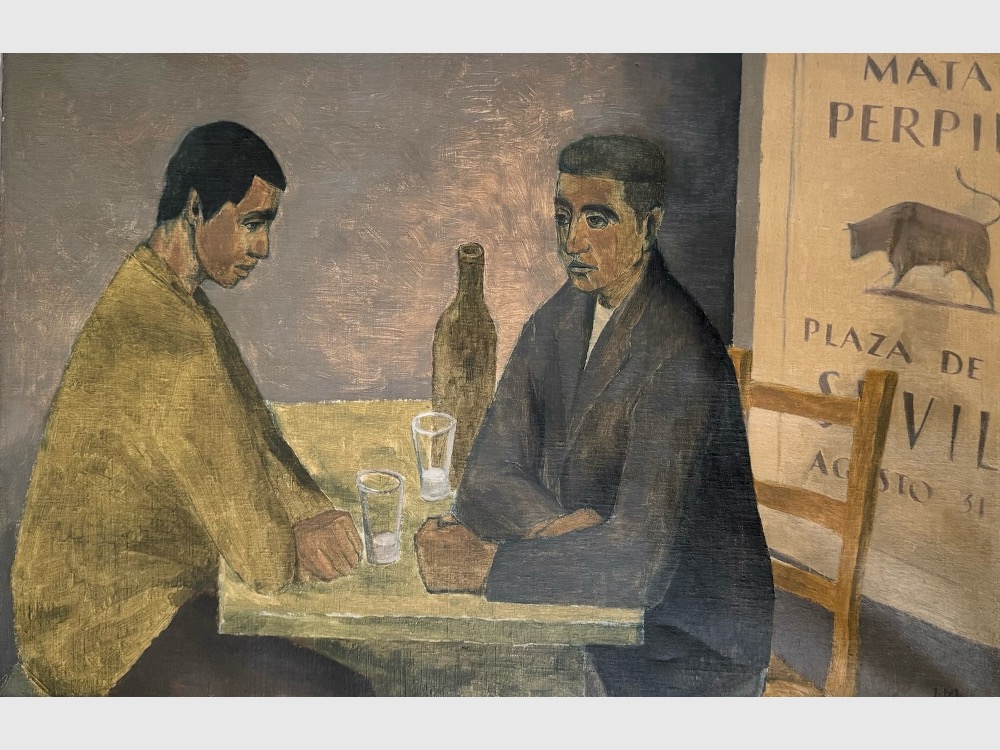
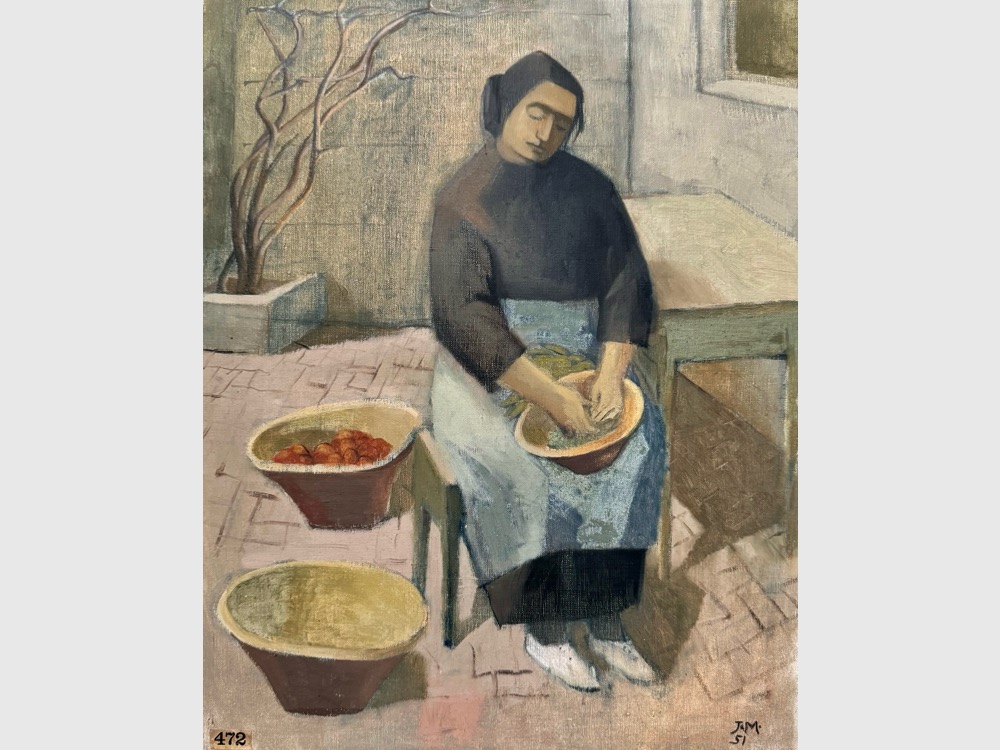
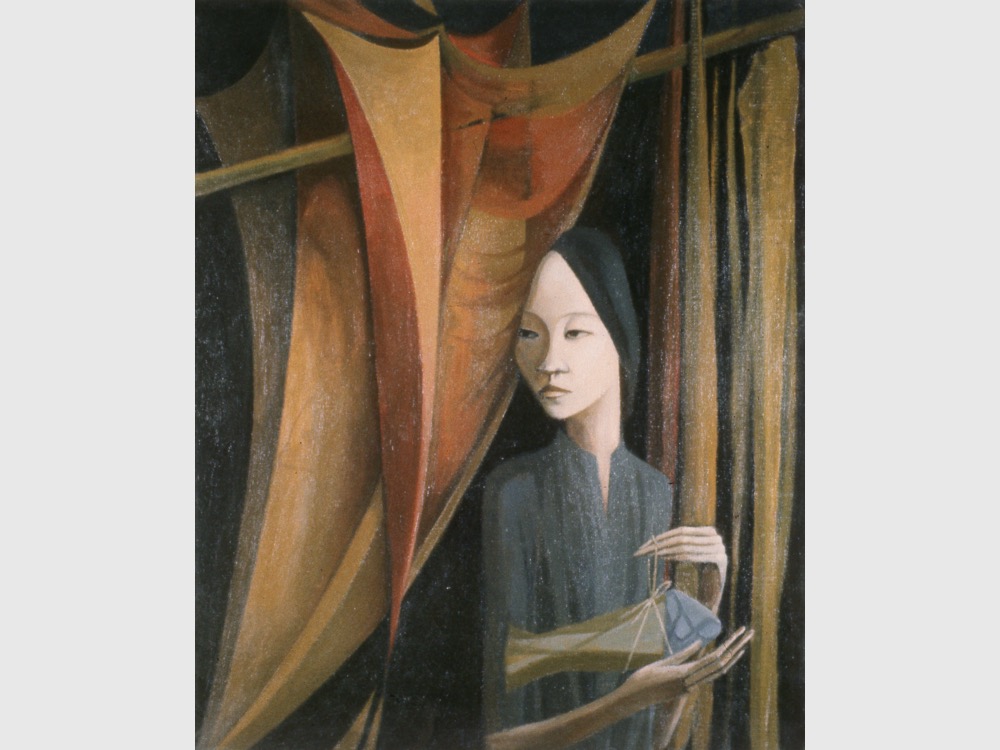
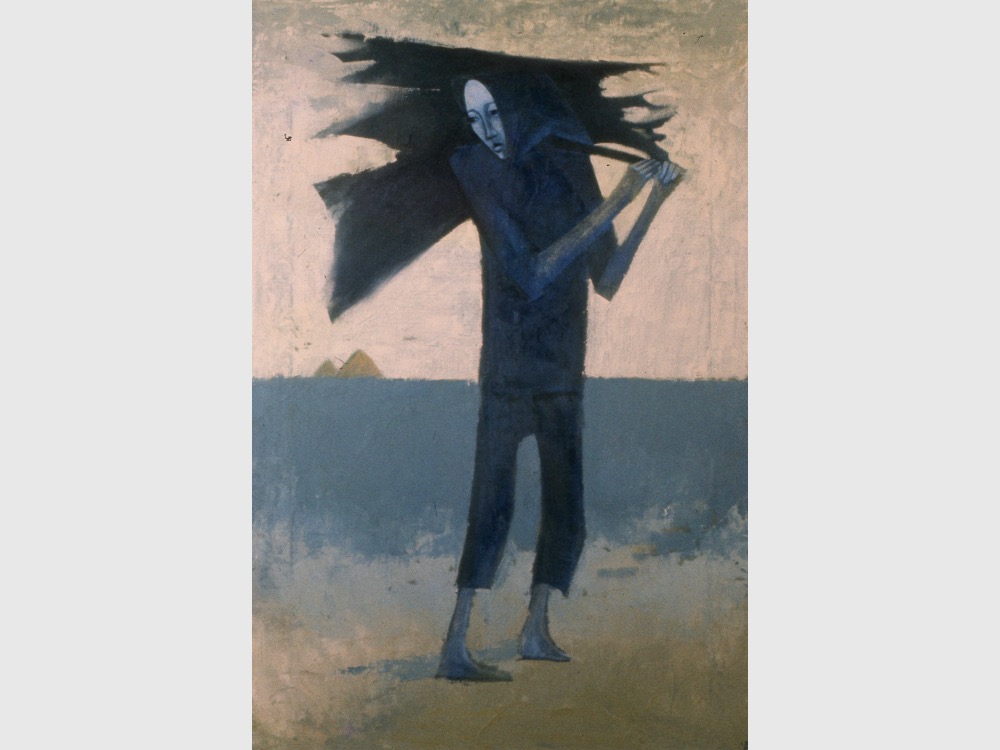
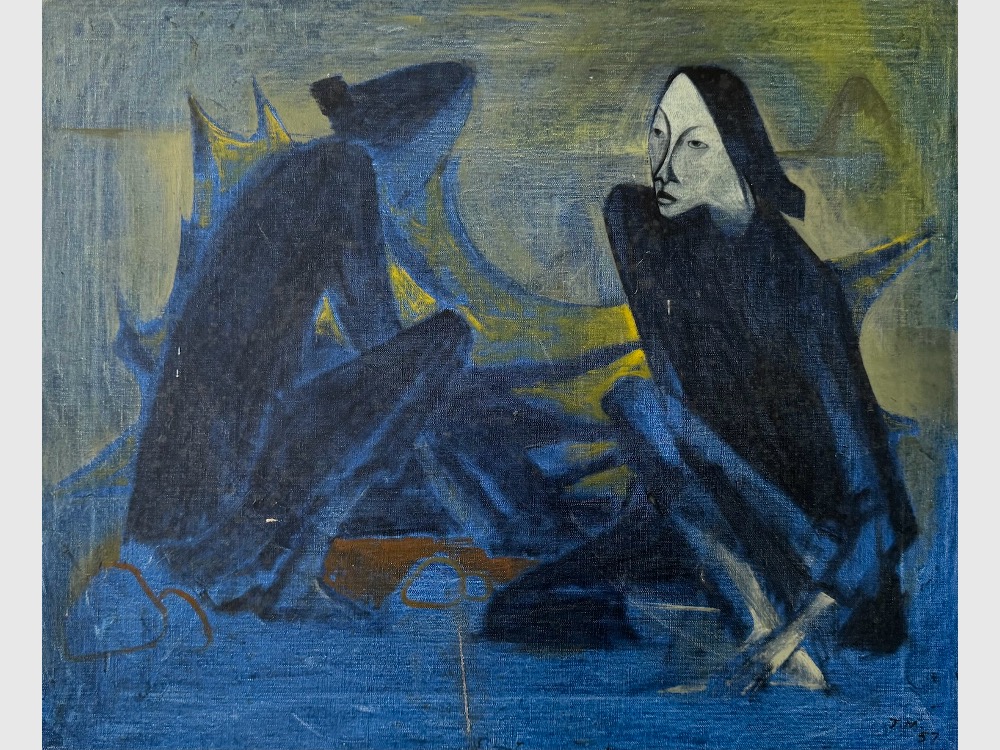
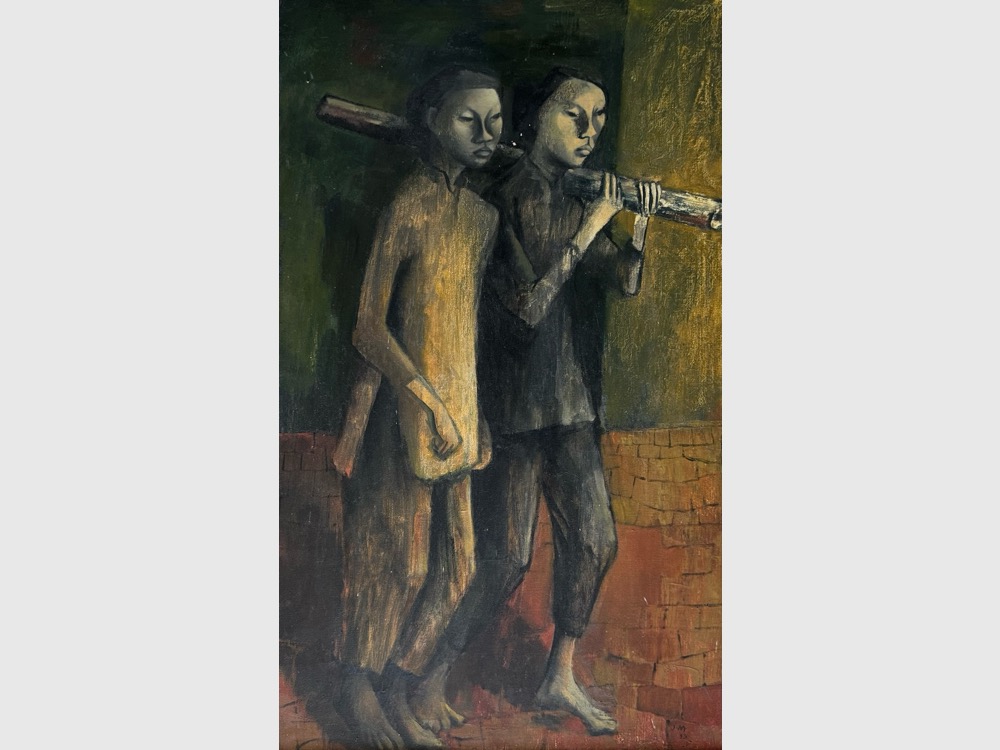
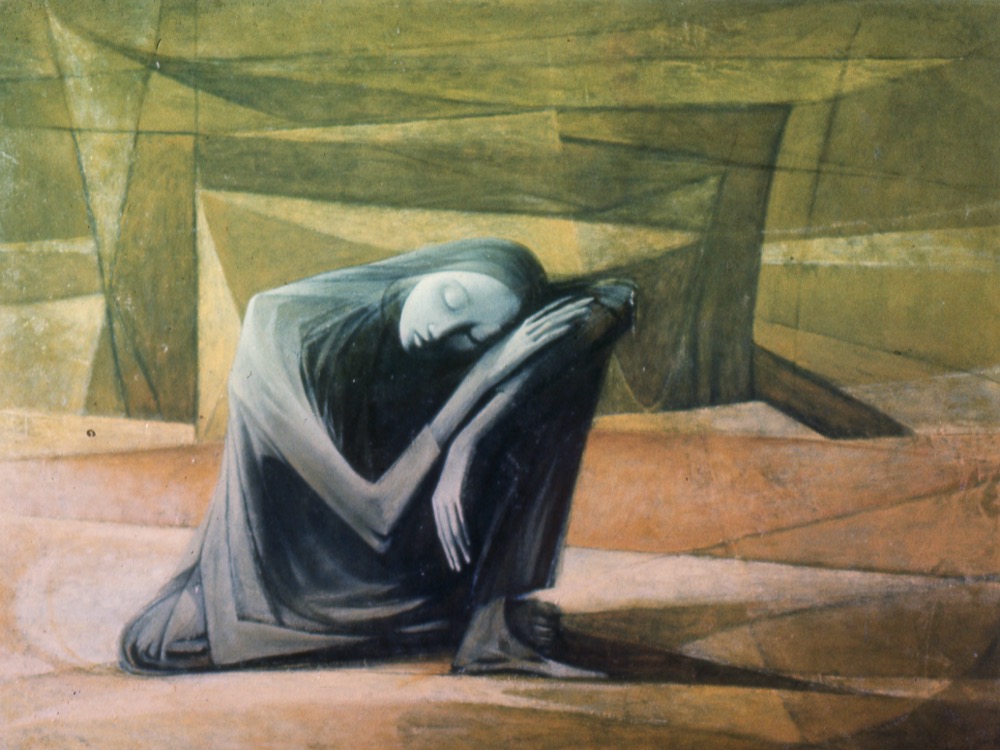
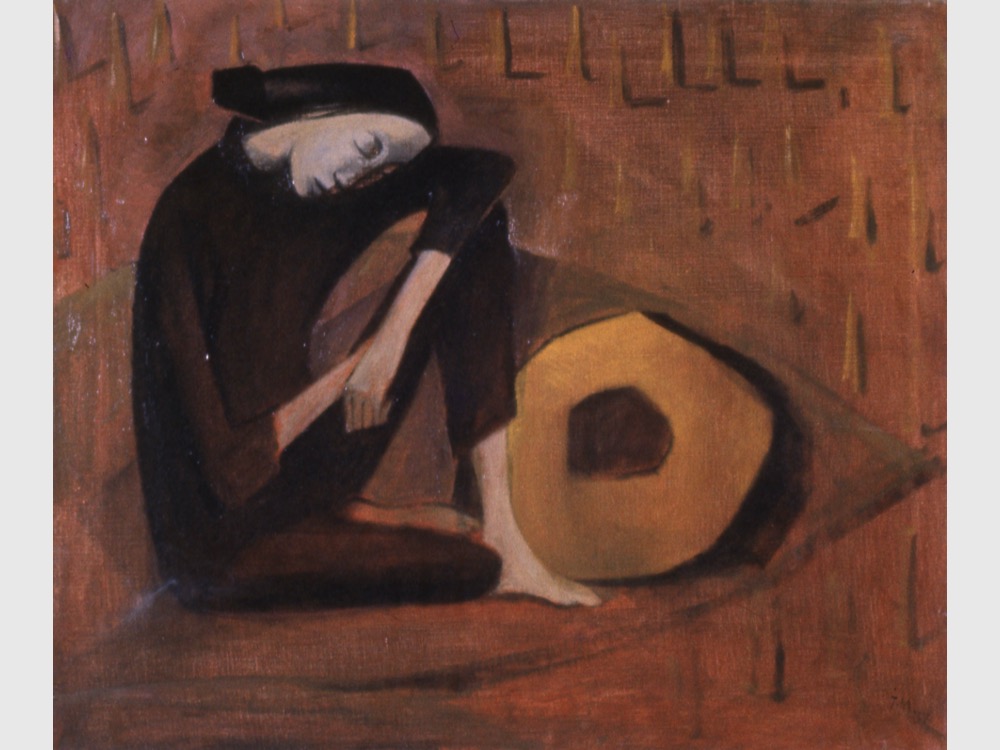

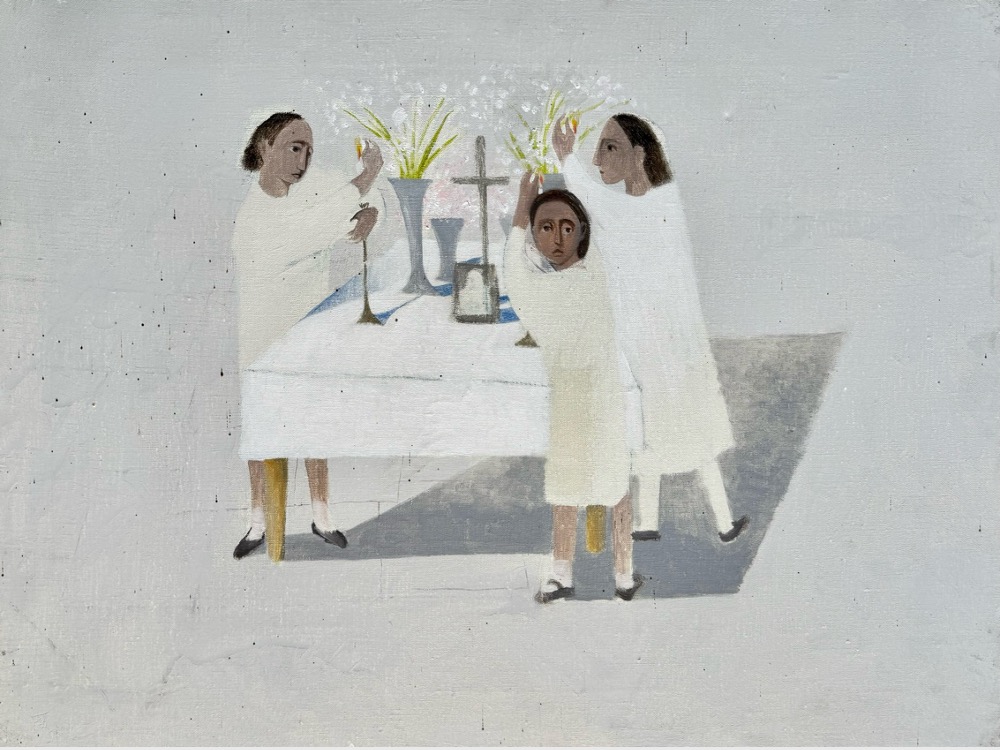
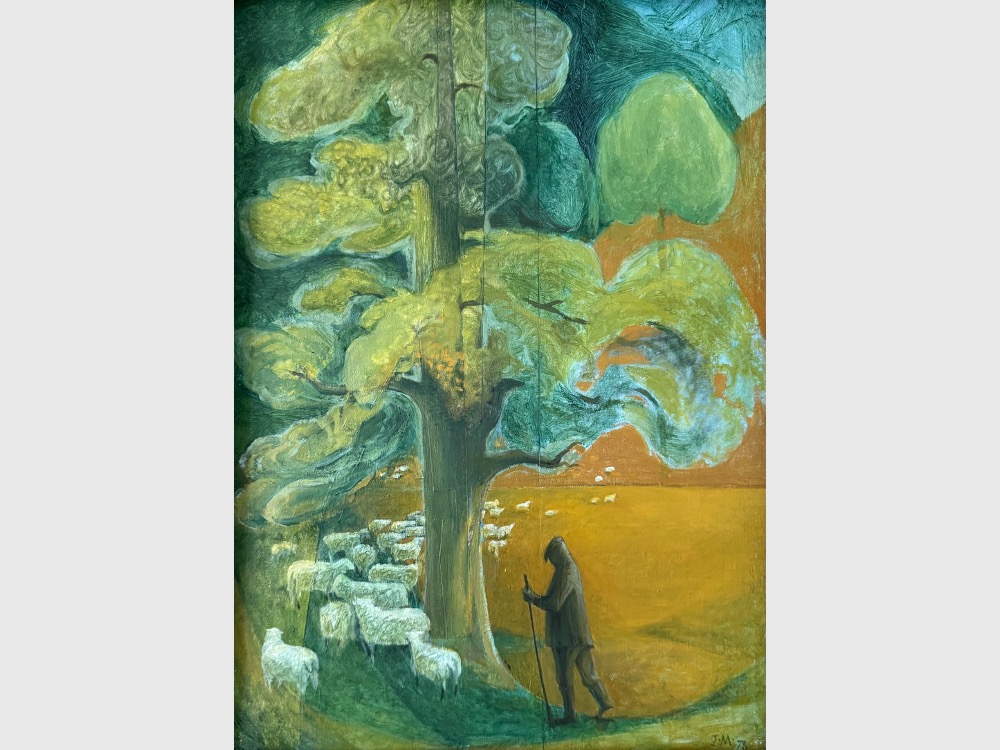

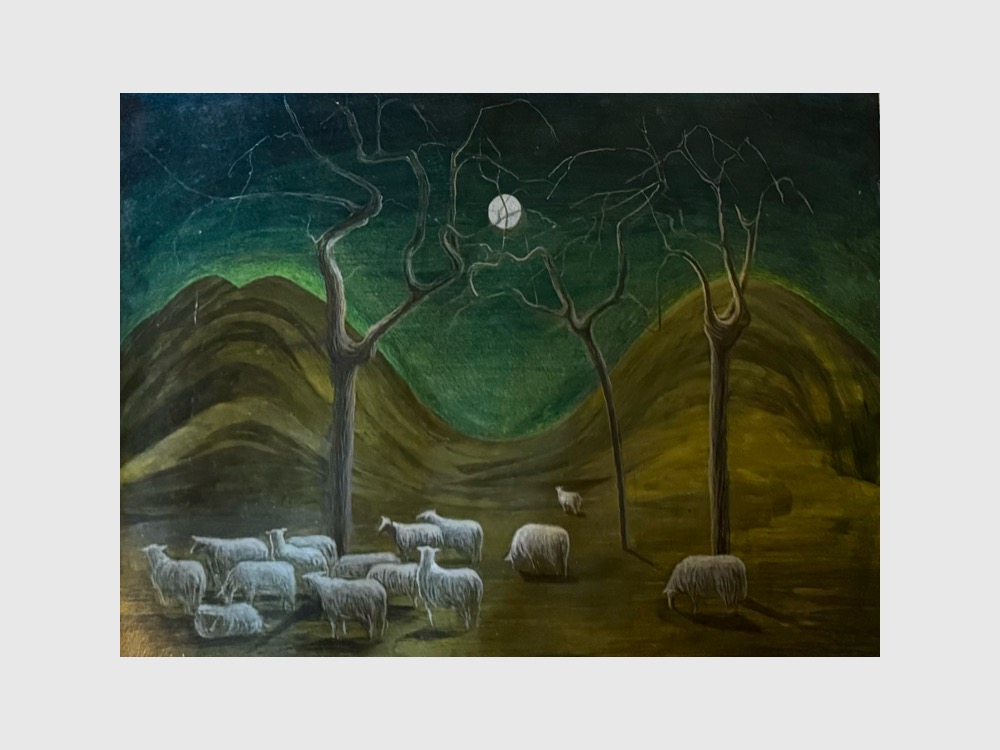
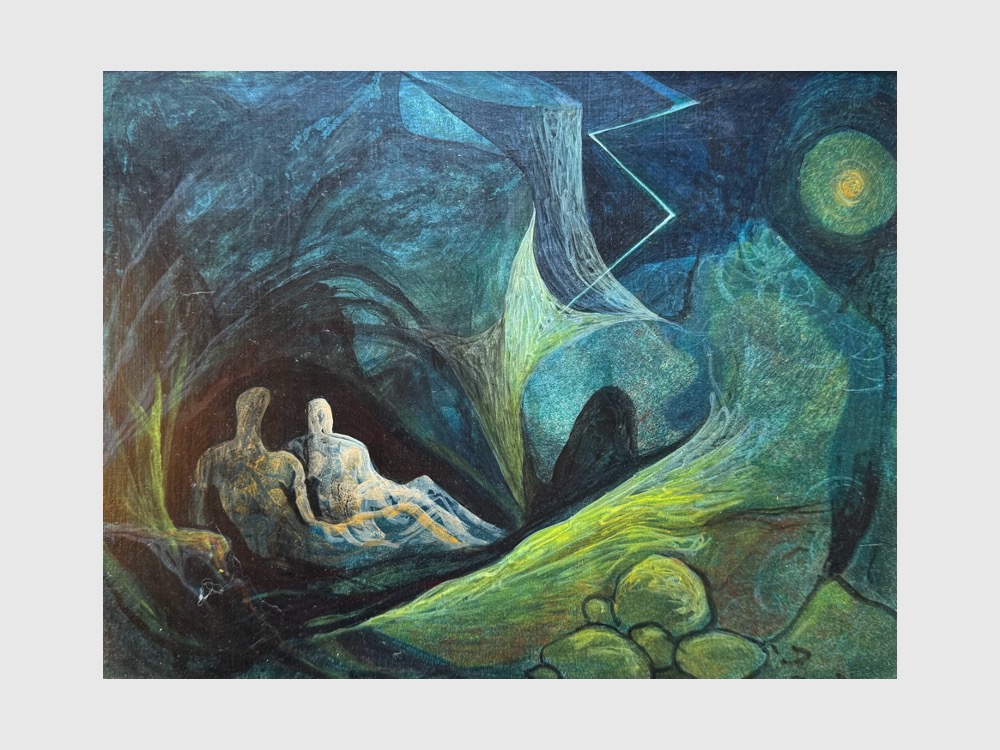
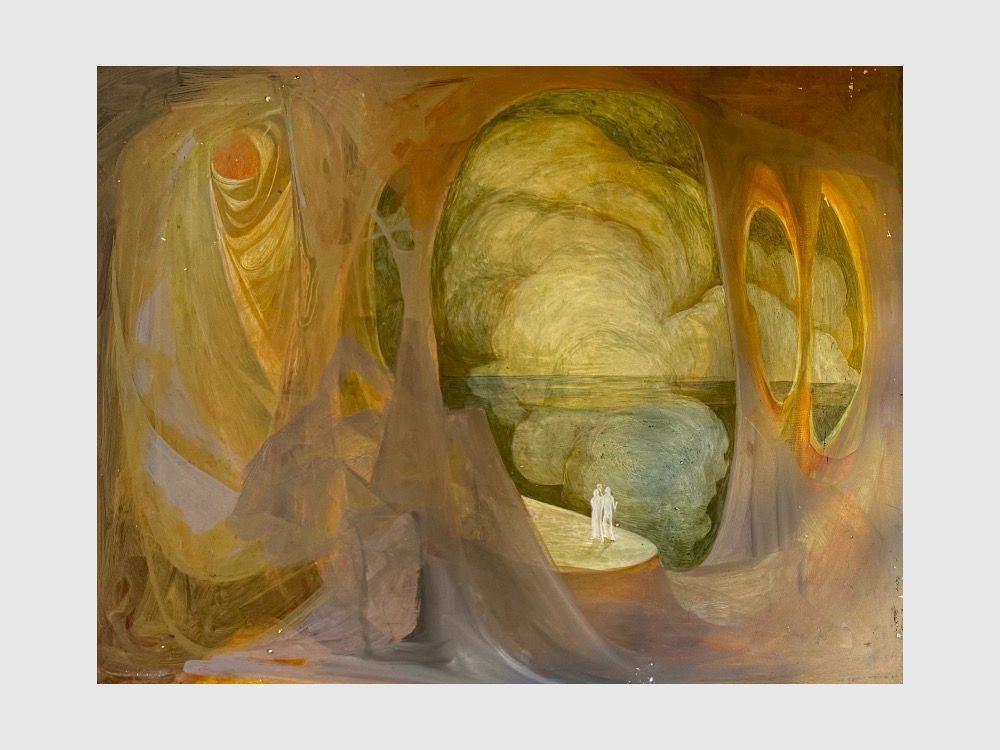
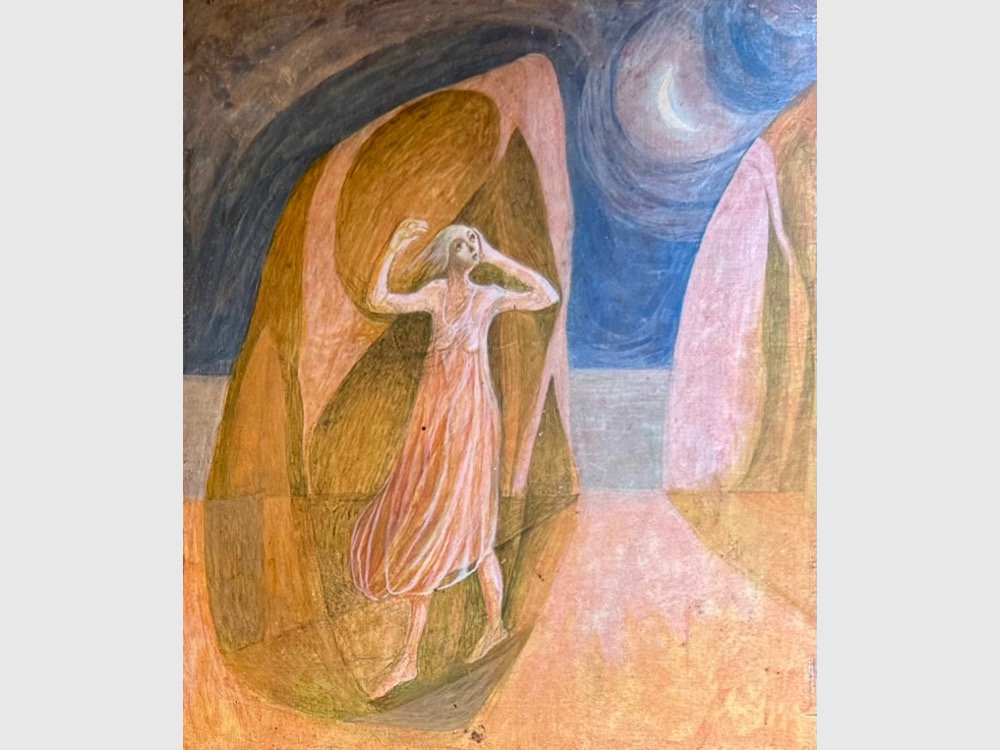
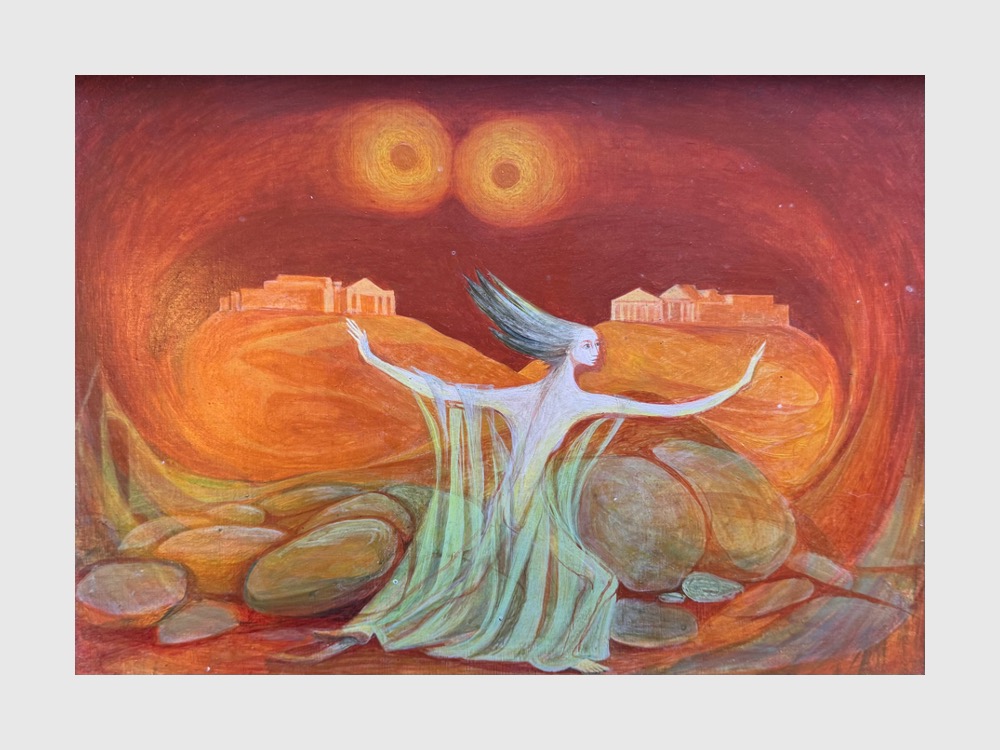
Julia Morley found that much had changed in the art world since she left England in 1948 and she no longer felt the imperative to make her mark.
Though lifetime recognition and critical acclaim eluded her, it is still not too late to introduce her works to new audiences.
With the encouragement and support of the artist’s estate, I am pleased to be working once more with Dr Harry Heuser toward a book and exhibition that aim to showcase as well as provide a long-overdue critical appraisal of Julia Morley’s oeuvre – an oeuvre that is presently all but lost to memory. Drawing on the artist’s extensive unpublished writings and correspondences, we intend to examine the personal and professional forces that shaped her career, assess her legacy, and position her artworks within the context of British art history.
We are interested to hear more of Julia Morley / Julia Baron, and to see and document more of her paintings and drawings. If you have artworks by Julia, or knew her and have stories to share, we would be delighted to hear from you.
 Robert Meyrick